Louis Armstrong’s Jazz Legacy: What It Teaches Megixtone
Louis Armstrong’s Jazz Legacy: What It Teaches Megixtone
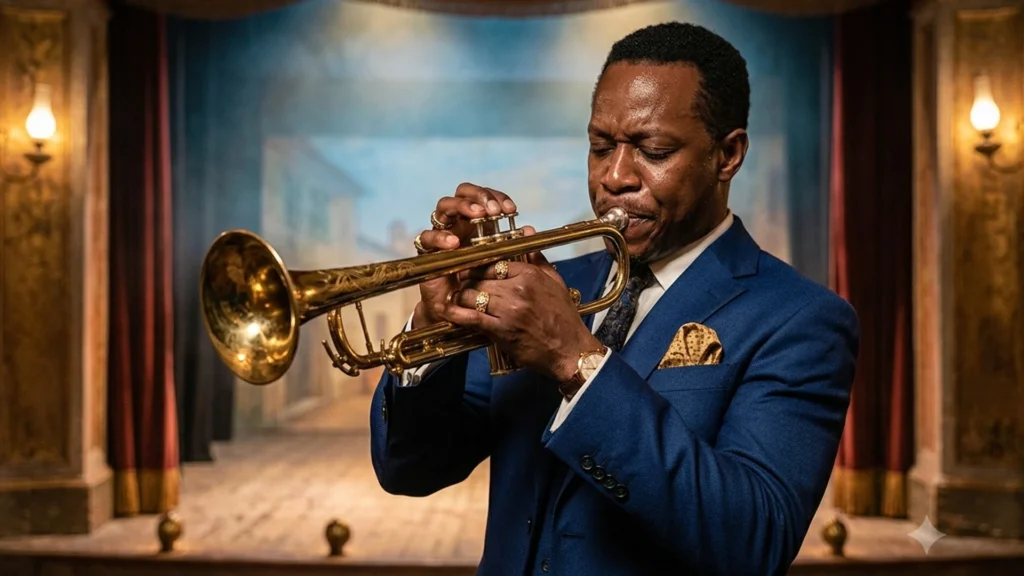
Louis Armstrong turned impeccable technique into an unmistakable musical voice. The Louis Armstrong House Museum recognises August 4, 1901 as the date supported by his baptismal record, while also explaining why Armstrong used July 4, 1900 for much of his life. Its birthday note is a useful reminder that even a familiar story can have more than one layer.
Technique needs intention
An Armstrong solo can sound effortless, but that freedom rests on breath, study, control, and listening. Wine has a similar truth: the simplest gesture is often the result of many invisible decisions.
Megixtone does not claim that a glass is a song. It uses jazz as an image of a practice where discipline and personality are not opposites. Technique exists to let character emerge, not to erase it.
A distinctive voice, in music and wine
Timbre is what allows us to recognise a voice after only a few notes. In wine, recognisability comes from place, vintage, and the coherence of the choices that interpret them. It is not a formula to reproduce every year. It is a signature that remains true to itself precisely by allowing change.
Megixtone’s stated preference for glass vinification belongs to this pursuit of listening. The aim is not to add an effect, but to create room for the material to speak. A memorable timbre does not need more volume.
The timing of a solo
In jazz, silence is not empty space. It prepares the next note. Tasting also needs that rhythm: leave the wine in the glass, return to an aroma, notice what air reveals over time.
Explore the Megixtone wine philosophy and, if you wish to follow the project, review the access process. This is not automatic purchasing, but the beginning of a shared act of listening.