


The Enneagram and Winemaking: Nine Symbolic Portraits
Between the vineyard and the cellar, decisions accumulate: what to preserve, when to act, how to respond to uncertainty and when to reconsider a conviction.
Bringing together the Enneagram and winemaking offers a literary way of exploring these choices.
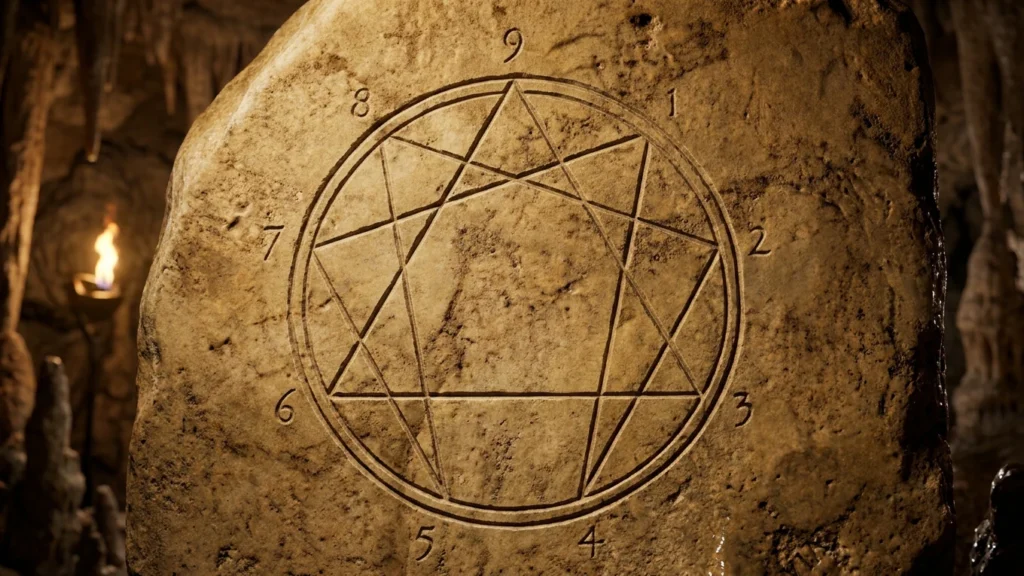
The personality system developed in the twentieth century draws on earlier spiritual traditions and describes nine interconnected patterns. Here, it provides inspiration for nine imagined portraits of a winemaker. Their purpose is to open questions about creative work and its tensions. The Narrative Enneagram
These figures belong to a symbolic narrative. They cannot establish a producer’s character or explain the qualities of a particular wine.
1. Anger: When Precision Becomes Rigidity
Imagine a winemaker who holds a clear vision of how every stage should unfold.
Care becomes constant correction. Any departure from the plan feels like a failure, and the desire to improve leaves little room for uncertainty.
The tension in this portrait lies between precision and receptiveness. A demanding standard can guide the work, while remaining open to observation allows the original intention to develop.
The question is how to pursue excellence without turning every unexpected detail into an adversary.
2. Pride: When Generosity Expects Recognition
The second portrait begins with the pleasure of offering something created with care.
Gradually, the gift acquires an expectation. Appreciation must confirm the importance of the person who made it; gratitude becomes a measure of their worth.
This imagined winemaker invites us to consider the relationship between generosity and recognition. Sharing an achievement also means allowing others to encounter it freely, with impressions that may differ from our own.
3. Vanity: When the Image Overtakes the Work
The third figure is attentive to reputation.
An anticipated review, a fashionable presentation or a prestigious setting begins to influence every decision. The story told about the bottle becomes increasingly difficult to separate from the desire to be admired.
This portrait raises a question about coherence: can the public image remain faithful to the intentions behind the work?
Recognition has a place, alongside the responsibility to remember what first gave the project direction.
4. Envy: When Comparison Becomes the Measure
The fourth winemaker looks repeatedly towards the neighbouring vineyard, the celebrated estate or the achievement that appears just beyond reach.
Comparison can awaken curiosity. In this portrait, however, it becomes a persistent sense of insufficiency.
The imagined tension concerns the search for a personal voice. Learning from others can enrich that search, provided there is still space to recognise the value of one’s own circumstances, choices and developing experience.
5. Avarice: When Protection Becomes Withdrawal
The fifth figure carefully guards knowledge, resources and the work accumulated over time.
Discretion gradually hardens into distance. Every request feels like a possible loss, and protecting the project leaves fewer opportunities for exchange.
This portrait asks where a useful boundary becomes isolation.
Knowledge can be preserved through care and thoughtful sharing. The challenge is to choose what deserves protection while keeping open the possibility of dialogue.
6. Fear: When Prudence Prevents a Decision
The sixth winemaker prepares for every difficulty.
Plans are checked, advice is sought and alternatives are examined. Yet each answer produces another doubt, until preparation itself becomes a way of postponing action.
Prudence remains valuable. The tension appears when the search for certainty makes every choice feel impossible.
This imagined figure asks how responsibility and judgement can support a decision even when complete certainty is unavailable.
7. Gluttony: When Possibility Becomes Excess
The seventh portrait is full of ideas.
Another experiment, another vessel, another direction promises a fresh beginning. Curiosity generates movement, while unfinished possibilities continue to accumulate.
Here, gluttony becomes an image of wanting every experience at once.
The question concerns selection: which ideas deserve time, and which should be allowed to pass? Giving one direction sufficient attention can be a demanding expression of creative freedom.
8. Lust: When Intensity Becomes Control
In this portrait, lust means an appetite for intensity and command.
The imagined winemaker wants every decision to bear a forceful personal signature. Collaboration becomes difficult when another perspective feels like a challenge to authority.
The tension lies between conviction and receptiveness.
A clear intention can give a project direction. Allowing that intention to encounter other knowledge, practical limits and different interpretations makes room for a more considered exercise of responsibility.
9. Sloth: When Acceptance Becomes Disengagement
The final figure seeks continuity and avoids confrontation.
In this imagined cellar, patience can become postponement. An unresolved question remains untouched because addressing it would disturb a familiar balance.
The distinction concerns attention: waiting may be a deliberate choice, while disengagement allows the choice to disappear from view.
This portrait asks how to remain present in the work, including when the most appropriate decision is to observe and wait.
The Mirror in the Glass
Together, these portraits describe tensions that can accompany creative work: ambition and humility, protection and openness, invention and consistency.
For MEGIXTONE, this symbolic reading offers a vocabulary for considering measure and responsibility.
The bottle becomes the starting point for questions about the intentions, relationships and decisions surrounding a project. The nine figures leave those questions open, inviting reflection on how care can remain attentive to its own limits.