


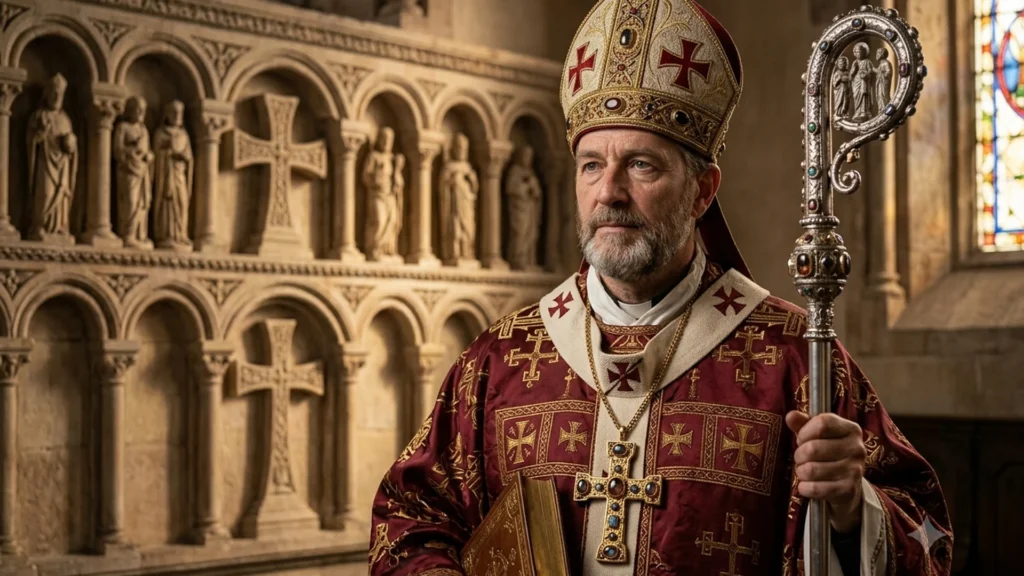
The History of San Severino Marche: Sources, Mystery, and Megixtone
The history of San Severino Marche is made of layers: ancient Septempeda, the memory of a bishop, the upper town, and the Potenza valley. Standard reference works describe a Roman centre, a sixth-century bishopric, and later Lombard phases. These layers matter because they invite a slower reading of place.
History of San Severino Marche: why sources matter
Ancient places often generate alternative interpretations, symbolic genealogies, and stories that connect distant territories. A direct link between Bishop Severinus and the Merovingian dynasty is not established by mainstream historical sources; here it is treated as a narrative suggestion, not a verified fact.
That distinction does not make the place less compelling. It makes it more worthy of attention. A landscape becomes richer when it can hold the fascination of questions alongside the responsibility of evidence. For context on the dynasty itself, see Britannica’s overview of the Merovingians.
A landscape as a living archive
Megixtone approaches the Marche not as a decorative backdrop, but as a real presence: soils, seasons, agricultural work, and silence. Local memory teaches us not to consume a history in a few slogans. It asks us to approach, observe, and let details form a larger picture.
In that sense, rarity is not a noble title. It is the outcome of a precise choice: giving time to what cannot be accelerated. Identity grows from continuity between place, gesture, and responsibility.
From mystery to a personal choice
Reading the history of San Severino Marche with care offers a useful lesson beyond archives: do not accept easy versions, but do not mistake a desire for mystery for proof. That balance is part of Megixtone’s own language.
Explore more Megixtone stories and, if you want to know the project more closely, request access information. Availability is never automatic; every contact begins with care rather than speed.