


St. Lawrence Night and Pascoli: Megixtone’s Quiet Light
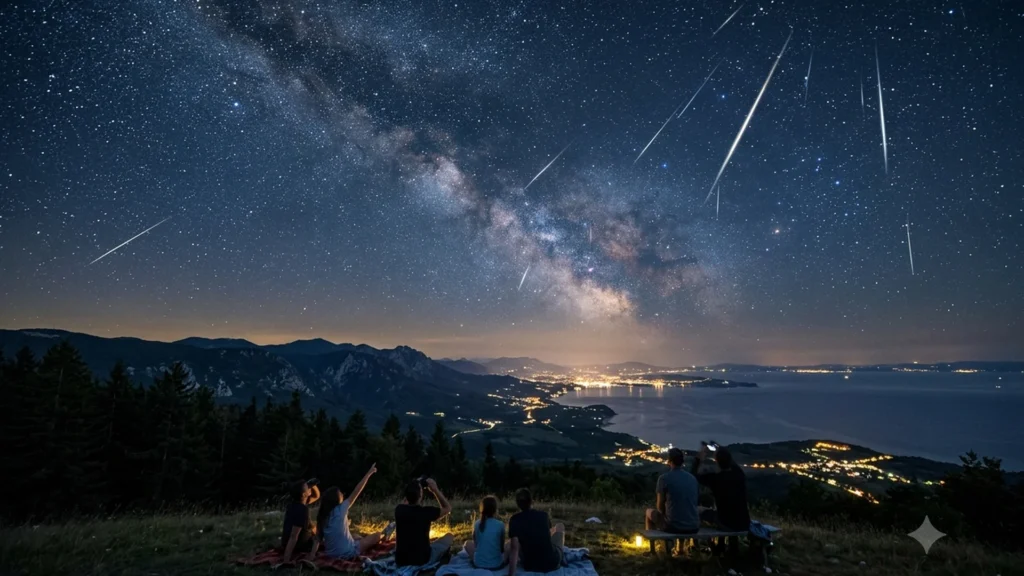
St. Lawrence Night and Pascoli meet in an image that still feels immediate: an August sky made of waiting, fragility, and light. In *X Agosto*, Giovanni Pascoli turns the falling stars into a “weeping of stars,” linking the night sky to grief and memory.
A light that needs darkness
Shooting stars are traditionally associated with St. Lawrence’s night, while the astronomical event seen in August is the Perseid meteor shower. The metaphor remains true: to see a meteor trail, the eyes must adapt to darkness. Bright screens and artificial light work against the experience. NASA’s guide to the Perseid meteor shower explains why the peak arrives in mid-August and why dark skies matter.
Megixtone chooses to tell its own story in this same field of attention. Not as a wine for quick display, but as a glass to open when conversation slows and daytime noise recedes. Waiting is not absence; it is a way of listening.
St. Lawrence Night and Pascoli: wine time
Every bottle contains a sequence of seasons and choices. Megixtone places long research and glass vinification at the centre of its narrative, describing both as a desire not to layer an extraneous character over the wine. In the glass, the idea becomes an invitation to seek precision rather than easy effects.
A contemplative wine does not need to be obscure. It should create room: for a changing aroma, a returning memory, or a question that does not demand an immediate answer. An August night is ideal for that gesture, but it is not the only setting.
A ritual without display
Choose a quiet place, an appropriate glass, and enough time to observe. That is enough to turn tasting into presence. For more ideas on intentional tasting, explore a memorable wine experience.
To approach Megixtone, read how access requests work. There is no instant promise, only the beginning of a conversation for people who value time.