


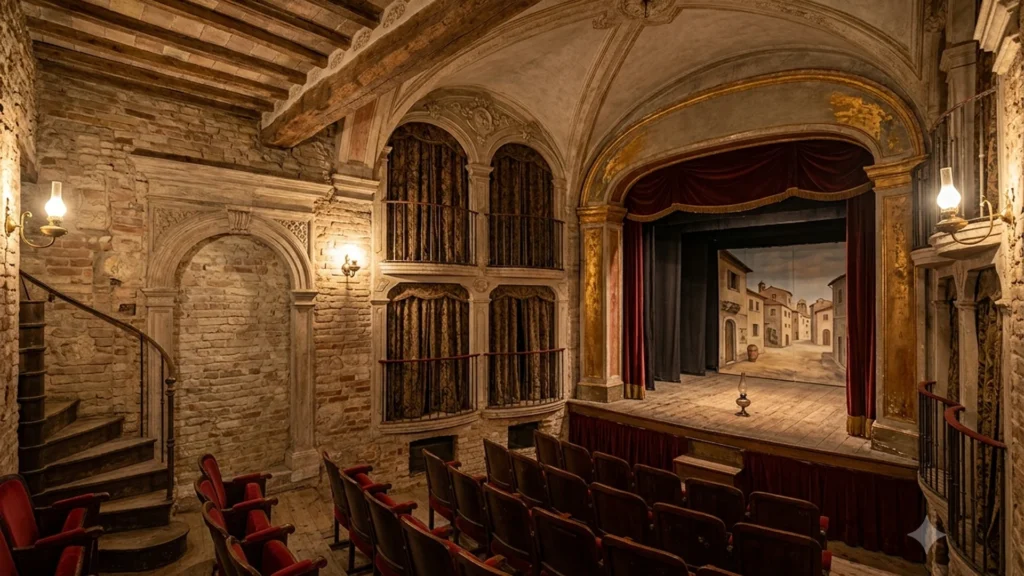
UNESCO Historic Theatres of the Marche: Music, Velvet, and Megixtone
UNESCO historic theatres of the Marche belong to a wider cultural story in central Italy. Accuracy matters here: in 2026 UNESCO inscribed the system of ten Italian-style *condominio* theatres across Emilia-Romagna, Marche, and Umbria. The UNESCO property record explains their shared model of civic and private participation. The larger regional network of historic Marche theatres has its own separate UNESCO candidacy.
A theatre is a measure of harmony
Anyone who has lived through music knows that a great performance is not made by one note alone. It comes from the relationship between time, silence, technique, and shared attention. Italian-style theatres make that idea physical: auditorium, boxes, curtain, and stage all have a part to play.
Megixtone uses a similar metaphor for its work. Vineyard, climate, harvest, and vinification are not separate chapters; they are parts of a composition. Elegance arrives when nothing tries to dominate without reason.
UNESCO historic theatres of the Marche and local identity
The Marche is home to musical spaces of different scale, from city theatres to intimate halls in small towns. This diffusion is part of its character: culture as a daily presence, not a backdrop. These theatres were often shaped by forms of civic and private participation, making them places of shared responsibility as well as performance.
Wine can learn from that lesson. A bottle does not need to shout to be remembered. It needs structure, rhythm, and room for the person tasting it.
From curtain to glass
The moment before a curtain rises has a particular quality: everything is ready, yet nothing has happened. Megixtone values that point of suspension. Its long research becomes the background to a shared moment, not a claim to display.
For the link between music, place, and the project, visit the story of Megixtone. If this idea of attention feels close to you, request access information.