Megixtone Logo Text
  • About me
  • History
  • How to Purchase
  • Contact
  • News
  • Login
  • Register
  • Reserved Area
  • English
  • Italian

News

divider
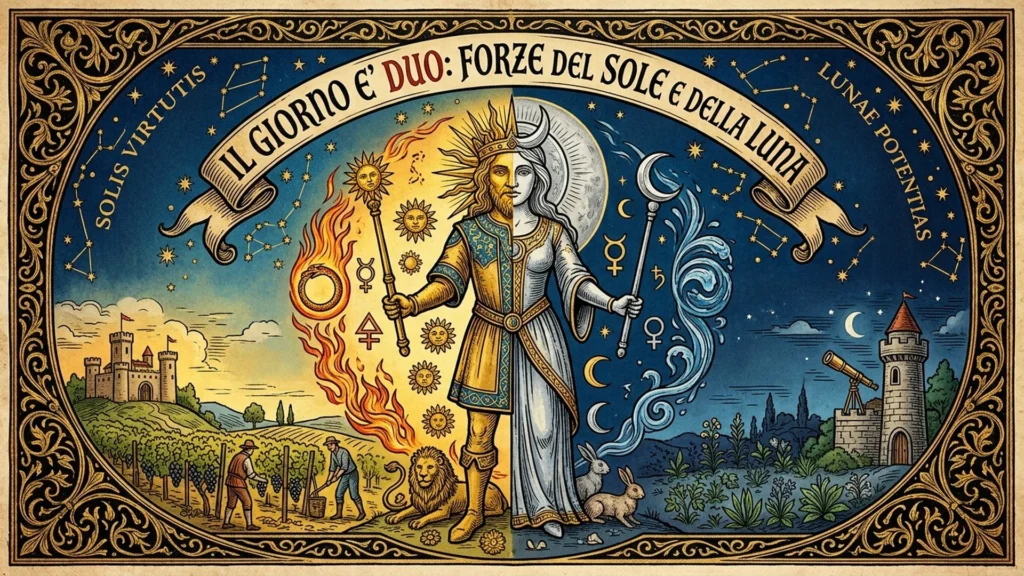
An illuminated manuscript showing an allegorical figure with a sun and moon inside an ornate border.

DUO and SON: How Megixtone Gives Time a Musical Language

17/09/2026
News

DUO and SON: How Megixtone Gives Time a Musical Language

DUO and SON are two names for the way Megixtone imagines a day. One describes the relationship between light and darkness; the other gives that changing relationship a musical voice. Together they form a personal language for observing time.

In the Megixtone calendar, thirteen months of twenty-eight days make 364 days. SON ATEM adds the final pause to the 365-day scheme. Within this symbolic architecture, each day can be considered as a distinct movement.

DUO and SON, two ways of reading a day

DUO names the pairing of daylight and darkness. Their changing duration provides a visible rhythm through the year, from winter’s shorter days to summer’s longer light.

The vineyard makes that passage tangible. A canopy, a shadow across the soil and the appearance of a bud all invite observation. The physiological life of a vine is real; DUO is the project’s way of turning attention towards it.

SON, inspired by the Latin sonus, introduces sound. Where DUO offers a proportion, SON suggests a mood, an intensity or a phrase. It is a poetic interpretation of the day, a way to imagine its character through sound.

A piece of music for each day

The concept associates each daily pairing with a piece of music: one DUO, one SON, one musical interpretation. Across the year, this becomes the idea of a sequence of 365 pieces.

Music can give form to differences that numbers alone do not convey. A sustained note suggests waiting; a pause can make the next sound more present. In the same way, looking at a vineyard repeatedly allows small changes to acquire meaning.

The connection does not depend on claiming that a particular frequency produces a particular flavour. It depends on the listener’s willingness to notice rhythm, contrast and duration.

Listening without a formula

For Megixtone, light and sound belong to a broader reflection on making wine. They offer images for the work’s changing pace and for the attention it asks of its creator.

DUO and SON give observation another vocabulary, carrying the dialogue between light and darkness into the act of listening. A day is no longer merely crossed off a calendar: it becomes something to look at, listen to and remember.
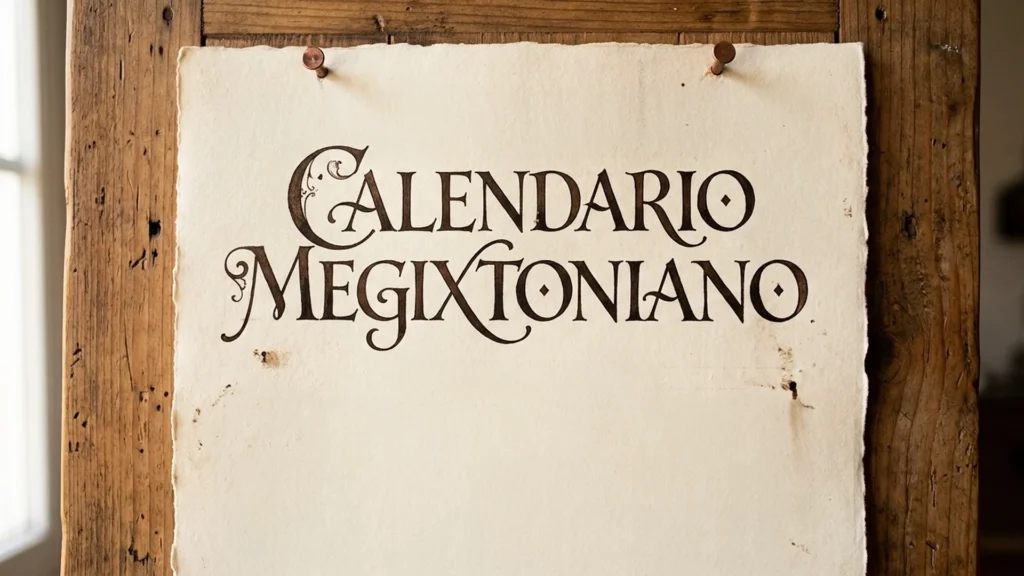

A parchment headed Calendario Megixtoniano hanging against weathered wooden boards.

The Megixtone Calendar: Thirteen Months of Transformation

16/09/2026
News

The Megixtone Calendar: Thirteen Months of Transformation

The Megixtone calendar gives the year a language of its own. Thirteen months of twenty-eight days describe a passage through rest, growth and transformation. Their names belong to the project’s symbolic world: a way to contemplate the life of wine, rather than a replacement for the agricultural calendar.

Thirteen times twenty-eight makes 364. A further day, SON ATEM, completes a 365-day cycle. This is a narrative structure, not an astronomical calendar or a timetable that determines when each vineyard operation must happen.

The thirteen months of the Megixtone calendar

IAN: the doorway. The cycle opens beneath the surface, in an image of winter stillness. Roots and earth seem to hold their breath. Rest is not the absence of a future harvest, but the quiet from which the story begins.

FEBRO: purification. The thought turns towards the return of sap and the vine’s reawakening. Its name evokes preparation: the moment before renewed growth becomes visible.

MAZ: vibration. The emerging bud becomes the centre of attention. Sound enters the narrative as an image of energy and expectancy, expressing the tension of life about to unfold.

APRI: opening. This is the gesture of unfolding, the passage from what is enclosed to what can meet the light. Flowering provides its symbolic image, without tying that event to a universal date.

MAIO: the green canopy. Leaves fill the view and the vineyard acquires a different density. The calendar turns from the promise of growth to its visible presence.

IUN: from flower to fruit. Fruit set marks a change in possibility. What began as a flower can become a berry, and the future harvest starts to take shape.

SOLI: the fullness of light. Conceived as the solstitial month, SOLI places sunlight at the centre of the story. It holds the image of summer at its most intense, when light seems to occupy the whole landscape.

IUL: the change of colour. Veraison becomes a threshold. The berries begin to change, and the vineyard can no longer be read as it was before.

GUSTI: the emergence of flavour. Sugar, acidity and aromas bring ripening into focus. The name suggests attention to what the fruit is becoming, not an instruction to harvest on a fixed day.

SETTI: fermentation. The scene moves towards the cellar. Yeasts transform sugars into alcohol, giving the calendar a tangible image of matter changing state and character.

OTTI: the descent into glass. Darkness and patience take over. Glass vessels belong to this chapter of Megixtone’s story, where the work becomes less visible but remains deliberate.

NOEM: settling. Gravity and time provide the central image. The month evokes clarification and quiet, as suspended particles slowly find their place.

DICEM: completion. The circle closes. Completion here means recognising the end of a passage before beginning another, rather than imposing a single finishing date on every wine.

SON ATEM, the pause outside the rhythm

In this symbolic scheme, 31 December is named SON ATEM. Atem is the German word for breath. The image is of a pause between phrases, a silence that allows the next movement to begin.

The calendar thus holds both a measured sequence and a space outside it. Its purpose is contemplative: it gives names to forms of attention that the ordinary succession of dates can conceal.

A personal language for the vineyard

These names are part of the world of Megixtone, where the language of music meets the changing appearance of the vineyard.

Their value lies elsewhere. By stepping outside the language of deadlines, the calendar asks us to look again at a familiar cycle. Rest, growth, transformation and waiting become moments to recognise, rather than time to get through.

Single-seater racing cars on a circuit, illustrating the contrast between speed and the slow creation of wine.

Between the Glass and the Stopwatch: Megixtone and The Out Lap

15/09/2026
News

Between the Glass and the Stopwatch: Megixtone and The Out Lap

A stopwatch and a wine glass seem to ask opposite things of time. One measures the fraction that can decide a result; the other invites us to slow down. The Out Lap, Formula 1’s travelling fine-dining experience, offers a setting in which to consider that contrast alongside Megixtone.

For the Monza edition on 4 and 5 September 2026, Formula 1 announced a menu by Massimo Bottura. The encounter between racing and cooking is the starting point for this reflection, not a collaboration between Megixtone and the event.

Megixtone and the time that cannot be hurried

Megixtone’s approach begins with accepting that some decisions cannot be brought forward simply because a deadline is convenient. The vineyard must be observed, the work reconsidered and the wine allowed the time its development requires.

In the history of the project, fifteen years of research and experimentation express that choice. They describe the gradual development of a vision, through choices that could not be settled in a single season.

Waiting, in this context, is active. It involves recognising a change, deciding whether to intervene and resisting the temptation to call something finished too soon. A quiet cellar can demand as much concentration as a place filled with movement.

The Out Lap and the culture of precision

The name comes from the lap a driver makes after leaving the pits. It is a moment of preparation before the next demand on the car and driver, rather than a lap returning to the pit lane.

Formula 1’s presentation of the Monza experience places Bottura’s cooking within a journey through the circuit. Racing provides the setting and its stories; dining gives guests a different way to experience them.

The food itself need not be hurried to express that world. Preparation and timing are already central to cooking. The contrast is therefore less between fast food and slow wine than between different disciplines of attention.

The detail that connects them

A racing result is measured publicly. The development of a wine is often judged in the privacy of repeated observations. Yet both invite a question: what happens when a small detail is treated as decisive?

For Megixtone, the answer is found in the refusal to let convenience settle a choice. The glass and the stopwatch remain different objects, but the care behind them makes their contrast worth considering.

From the story to the glass

To discover Megixtone beyond its story, learn about the private allocation process.

Christopher Columbus 1492 voyage: a sailing ship heading towards the horizon

Christopher Columbus’s 1492 Voyage: Beyond the Horizon with Megixtone

31/08/2026
News


Christopher Columbus’s 1492 Voyage: Beyond the Horizon with Megixtone

Christopher Columbus’s 1492 voyage remains one of history’s strongest images of an horizon turned into a question. Columbus, probably born in Genoa in 1451, reached the Caribbean during an expedition backed by the Crown of Castile. The Library of Congress account of Columbus and the Taino also makes clear that these islands were already home to peoples whose lives were profoundly and violently changed by European arrival.

Beyond legend, towards sources

Columbus’s story has produced many theories, genealogies, and alternative narratives. The claim that he was the illegitimate son of Pope Innocent VIII is not supported by established historical research and should not be presented as evidence. Setting aside an unproven thesis does not make the voyage less compelling; it makes the difference between a map, a source, and a wish easier to see.

Christopher Columbus 1492 voyage: vision and method

Sailing into uncertainty is not courage alone. It requires instruments, calculations, attention to wind, and decisions under pressure. This is the part of the metaphor that matters to Megixtone: a vision gains value when it is sustained by method, patience, and responsibility.

In wine, finding a personal route does not mean refusing knowledge. It means building a coherent practice. Megixtone presents fifteen years of study as the time needed to understand which gestures are necessary and which belong only to convention.

Discovery is never neutral

Speaking about 1492 today requires a complete view. The encounter between worlds was not an adventure without consequences; it opened an era of conquest, violence, and irreversible change. Recognising that complexity makes the metaphor more mature. This is not a celebration of conquest, but a question about the relationship between ambition and responsibility.

If you are interested in a project that seeks to move beyond limits without losing its roots, read Inside Megixtone. To learn about the selection path, request access information.

Louis Armstrong jazz legacy: a trumpeter performing on stage

Louis Armstrong’s Jazz Legacy: What It Teaches Megixtone

29/08/2026
News


Louis Armstrong’s Jazz Legacy: What It Teaches Megixtone

Louis Armstrong turned impeccable technique into an unmistakable musical voice. The Louis Armstrong House Museum recognises August 4, 1901 as the date supported by his baptismal record, while also explaining why Armstrong used July 4, 1900 for much of his life. Its birthday note is a useful reminder that even a familiar story can have more than one layer.

Technique needs intention

An Armstrong solo can sound effortless, but that freedom rests on breath, study, control, and listening. Wine has a similar truth: the simplest gesture is often the result of many invisible decisions.

Megixtone does not claim that a glass is a song. It uses jazz as an image of a practice where discipline and personality are not opposites. Technique exists to let character emerge, not to erase it.

A distinctive voice, in music and wine

Timbre is what allows us to recognise a voice after only a few notes. In wine, recognisability comes from place, vintage, and the coherence of the choices that interpret them. It is not a formula to reproduce every year. It is a signature that remains true to itself precisely by allowing change.

Megixtone’s stated preference for glass vinification belongs to this pursuit of listening. The aim is not to add an effect, but to create room for the material to speak. A memorable timbre does not need more volume.


The timing of a solo

In jazz, silence is not empty space. It prepares the next note. Tasting also needs that rhythm: leave the wine in the glass, return to an aroma, notice what air reveals over time.

Explore the Megixtone wine philosophy and, if you wish to follow the project, review the access process. This is not automatic purchasing, but the beginning of a shared act of listening.

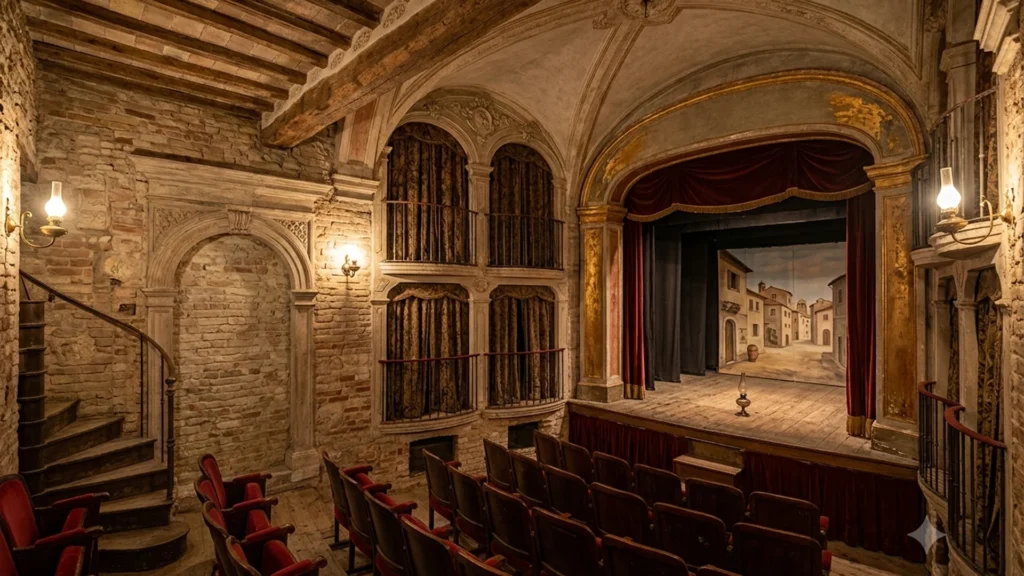
UNESCO historic theatres of the Marche: an Italian-style theatre auditorium

UNESCO Historic Theatres of the Marche: Music, Velvet, and Megixtone

27/08/2026
News


UNESCO Historic Theatres of the Marche: Music, Velvet, and Megixtone

UNESCO historic theatres of the Marche belong to a wider cultural story in central Italy. Accuracy matters here: in 2026 UNESCO inscribed the system of ten Italian-style *condominio* theatres across Emilia-Romagna, Marche, and Umbria. The UNESCO property record explains their shared model of civic and private participation. The larger regional network of historic Marche theatres has its own separate UNESCO candidacy.

A theatre is a measure of harmony

Anyone who has lived through music knows that a great performance is not made by one note alone. It comes from the relationship between time, silence, technique, and shared attention. Italian-style theatres make that idea physical: auditorium, boxes, curtain, and stage all have a part to play.

Megixtone uses a similar metaphor for its work. Vineyard, climate, harvest, and vinification are not separate chapters; they are parts of a composition. Elegance arrives when nothing tries to dominate without reason.

UNESCO historic theatres of the Marche and local identity

The Marche is home to musical spaces of different scale, from city theatres to intimate halls in small towns. This diffusion is part of its character: culture as a daily presence, not a backdrop. These theatres were often shaped by forms of civic and private participation, making them places of shared responsibility as well as performance.

Wine can learn from that lesson. A bottle does not need to shout to be remembered. It needs structure, rhythm, and room for the person tasting it.

From curtain to glass

The moment before a curtain rises has a particular quality: everything is ready, yet nothing has happened. Megixtone values that point of suspension. Its long research becomes the background to a shared moment, not a claim to display.

For the link between music, place, and the project, visit the story of Megixtone. If this idea of attention feels close to you, request access information.

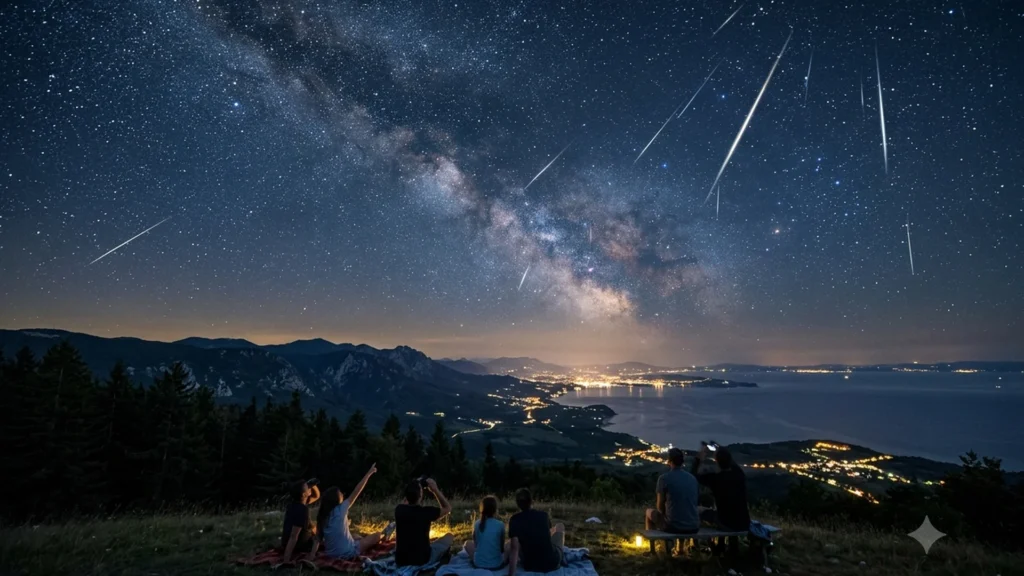
St. Lawrence Night and Pascoli: shooting stars over hills

St. Lawrence Night and Pascoli: Megixtone’s Quiet Light

25/08/2026
News


St. Lawrence Night and Pascoli: Megixtone’s Quiet Light

St. Lawrence Night and Pascoli meet in an image that still feels immediate: an August sky made of waiting, fragility, and light. In *X Agosto*, Giovanni Pascoli turns the falling stars into a “weeping of stars,” linking the night sky to grief and memory.

A light that needs darkness

Shooting stars are traditionally associated with St. Lawrence’s night, while the astronomical event seen in August is the Perseid meteor shower. The metaphor remains true: to see a meteor trail, the eyes must adapt to darkness. Bright screens and artificial light work against the experience. NASA’s guide to the Perseid meteor shower explains why the peak arrives in mid-August and why dark skies matter.

Megixtone chooses to tell its own story in this same field of attention. Not as a wine for quick display, but as a glass to open when conversation slows and daytime noise recedes. Waiting is not absence; it is a way of listening.

St. Lawrence Night and Pascoli: wine time

Every bottle contains a sequence of seasons and choices. Megixtone places long research and glass vinification at the centre of its narrative, describing both as a desire not to layer an extraneous character over the wine. In the glass, the idea becomes an invitation to seek precision rather than easy effects.

A contemplative wine does not need to be obscure. It should create room: for a changing aroma, a returning memory, or a question that does not demand an immediate answer. An August night is ideal for that gesture, but it is not the only setting.

A ritual without display

Choose a quiet place, an appropriate glass, and enough time to observe. That is enough to turn tasting into presence. For more ideas on intentional tasting, explore a memorable wine experience.

To approach Megixtone, read how access requests work. There is no instant promise, only the beginning of a conversation for people who value time.

History of San Severino Marche: a bishop inside a historic church

The History of San Severino Marche: Sources, Mystery, and Megixtone

23/08/2026
News


The History of San Severino Marche: Sources, Mystery, and Megixtone

The history of San Severino Marche is made of layers: ancient Septempeda, the memory of a bishop, the upper town, and the Potenza valley. Standard reference works describe a Roman centre, a sixth-century bishopric, and later Lombard phases. These layers matter because they invite a slower reading of place.

History of San Severino Marche: why sources matter

Ancient places often generate alternative interpretations, symbolic genealogies, and stories that connect distant territories. A direct link between Bishop Severinus and the Merovingian dynasty is not established by mainstream historical sources; here it is treated as a narrative suggestion, not a verified fact.

That distinction does not make the place less compelling. It makes it more worthy of attention. A landscape becomes richer when it can hold the fascination of questions alongside the responsibility of evidence. For context on the dynasty itself, see Britannica’s overview of the Merovingians.

A landscape as a living archive

Megixtone approaches the Marche not as a decorative backdrop, but as a real presence: soils, seasons, agricultural work, and silence. Local memory teaches us not to consume a history in a few slogans. It asks us to approach, observe, and let details form a larger picture.

In that sense, rarity is not a noble title. It is the outcome of a precise choice: giving time to what cannot be accelerated. Identity grows from continuity between place, gesture, and responsibility.

From mystery to a personal choice

Reading the history of San Severino Marche with care offers a useful lesson beyond archives: do not accept easy versions, but do not mistake a desire for mystery for proof. That balance is part of Megixtone’s own language.

Explore more Megixtone stories and, if you want to know the project more closely, request access information. Availability is never automatic; every contact begins with care rather than speed.

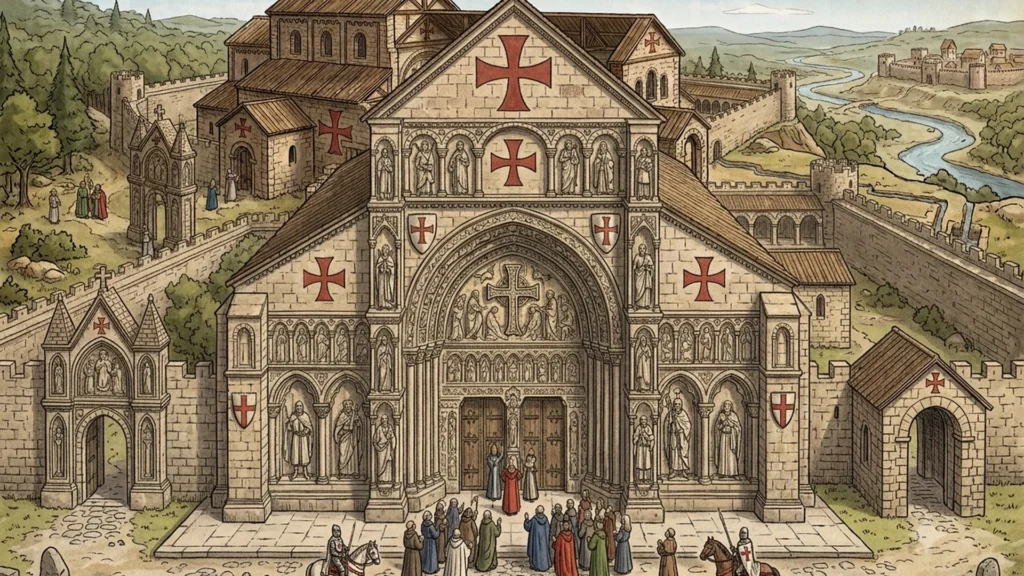
Sacred architecture and wine: an ancient basilica seen from above

Sacred Architecture and Wine: From Foundation to Light with Megixtone

21/08/2026
News


Sacred Architecture and Wine: From Foundation to Light with Megixtone

Sacred architecture and wine can speak a common language when both are understood as works of proportion, material, and time. A cathedral is never only its facade. It begins with foundations, a sequence of spaces, and a relationship between shadow and light. Wine also needs an invisible structure before it reaches the glass.

The crypt: valuing what cannot be seen

The crypt is an image rather than a technical comparison with a particular church. It represents the quietest part of any work: the stage built without an audience. For Megixtone, it recalls years of research, vineyard observation, and decisions made away from market pressure.

Buildings of lasting power show that stability is not spectacle. It is preparation. UNESCO’s account of the Historic Areas of Istanbul shows how monuments such as Hagia Sophia become meaningful through structure, history, and the dialogue between architecture and light.

Sacred architecture and wine: a geometry of restraint

In the Megixtone story, glass is chosen as a vessel intended to accompany the wine without adding an overt aromatic signature. It is an identity-led choice: reduce what is extraneous and leave vintage, fruit, and time at the centre.

Like a nave leading the eye towards a vanishing point, coherent winemaking needs direction. It does not reject technique; it uses technique with discipline. Each step should justify the one that follows.

A vertical vision from the Marche

Churches and hill towns in the Marche remind us that intensity is not a matter of scale. A modest rural building can hold great force through its restraint. In the same way, a micro-production is not meaningful because the number is small, but because every choice remains legible.

To explore the context behind this work, visit the story of Megixtone. If this search for precision feels close to you, request access information.

Pictor's Metamorphoses Hermann Hesse: a butterfly changing on a branch

Pictor’s Metamorphoses by Hermann Hesse: Love, Change, and Megixtone

19/08/2026
News


Pictor’s Metamorphoses by Hermann Hesse: Love, Change, and Megixtone

Pictor’s Metamorphoses Hermann Hesse and Megixtone share a simple question: what happens when a form refuses to remain final? Hesse wrote this illustrated love story in 1922 for Ruth Wenger, who would later become his second wife. The English edition introduces it as a tale of transformation and love.

From matter to change

In wine, transformation is not a special effect. It is a sequence of choices, temperatures, waiting, and restraint. The vine gives its fruit; time opens different possibilities; the person making the wine decides when to act and when to let change unfold.

Megixtone describes this as listening. The project does not try to make every vintage identical to the last. Instead, it seeks to recognise the singular character of each harvest. Consistency is not repetition; it is fidelity to a vision.

Pictor’s Metamorphoses Hermann Hesse and the risk of standing still

In Hesse’s story, Pictor becomes a tree and discovers the sadness of a form that can no longer evolve. It is not a literal wine lesson, but it offers a useful way to approach a glass: a great wine is never static. It changes in the glass, in memory, and in conversation.

That is why tasting deserves time. Letting a wine breathe, watching its colour, returning to its aromas: these small gestures give time its proper place. Megixtone proposes a relationship with wine that reaches beyond possession and becomes an experience of attention.

Care as a shared language

The bond between land, vineyard, and person is not a perfect fairy tale. It is made of care and responsibility. Metamorphosis names the passage from grape to wine, from waiting to choice, and from bottle to the moment it is opened.

Read more about a wine that changes your life, or explore how to request access. With Megixtone, access is not a cart transaction; it is the beginning of a private conversation.

« Recent News
Older News »

logo

FAQ

P.IVA 02065410439 | COPYRIGHT MEGIXTONE ® 2024 | REGISTERED TRADEMARK

COOKIE POLICY (EU) | DICHIARAZIONE SULLA PRIVACY (EU) | PRIVACY POLICY (US) | OPT OUT PREFERENCES

WhatsApp us